Field notes · Toronto · 3 min read

After Hyrox Toronto: how to read your result
What the splits in a Hyrox result actually tell you: where your time went, what roxzone share means, and how to compare across divisions honestly.
Edited by Laura Rossi
Hyrox athlete, Toronto · Oct 6, 2026
The finish line at Enercare Centre gives you one number. The results page gives you seventeen: eight run splits, eight station splits, and a roxzone total. The single number is for telling people; the seventeen are for getting faster. Here's how to read them, whether your Toronto race finished an hour ago or you're coming back to this in March.
What's actually in a Hyrox result?
Three layers. Run splits, one for each of the eight roughly 1 km runs. Station splits, one for each of SkiErg, sled push, sled pull, burpee broad jumps, row, farmers carry, sandbag lunges, and wall balls. And roxzone time, which is everything in between. Your finish time is the sum, which means every one of those seventeen lines is a place time was either spent well or leaked.
What is roxzone share, and how much is normal?
Roxzone time is your transitions: run in, find the station, chalk up, start working, and back out again. It counts, every second of it. As a share of the race it varies a lot, but for first-timers it commonly runs to several minutes, sometimes close to ten, and it's the cheapest time on the whole results page. No fitness required to reclaim it: know the station order, walk the floor before your wave next time, and don't treat the roxzone as a rest area. The roxzone guide covers how to train it. If your roxzone share is noticeably larger than athletes who finished near you, that's free speed.
Which splits tell you the most?
Two comparisons do most of the work.
- Run one against runs six, seven, and eight. Some fade is normal; a collapse means you paid for an ambitious first half in the second one. If your last runs are dramatically slower than your first, next cycle's answer is pacing and compromised running, not more station strength.
- Wall balls against everything else. The final station catches whatever the race has left of you. A wall balls split full of broken sets and no-reps usually says less about your shoulders than about everything that came before them. The sleds carry a similar signal: they punish athletes who spent their legs on the early runs.
Can you compare across Hyrox divisions?
Only with care. Pro divisions move heavier loads than open, so an open time and a pro time aren't the same race. Doubles pairs run every metre together but split the station work between them, so doubles times sit well apart from singles times by design. Men's and women's divisions use different loads too. The honest comparisons are within your own division and gender, and best of all, against your own previous result.
What should you actually do with it?
Pick the two or three biggest gaps and ignore the rest. A result that says slow sleds, big run fade, and four minutes of wandering roxzone is not a list of seventeen problems, it's a training plan with three lines. Write those down while the race is fresh, because by next week the whole thing will have compressed into one number and a feeling. When the next race lands on the calendar, those lines are also how you set a target you can actually hit.
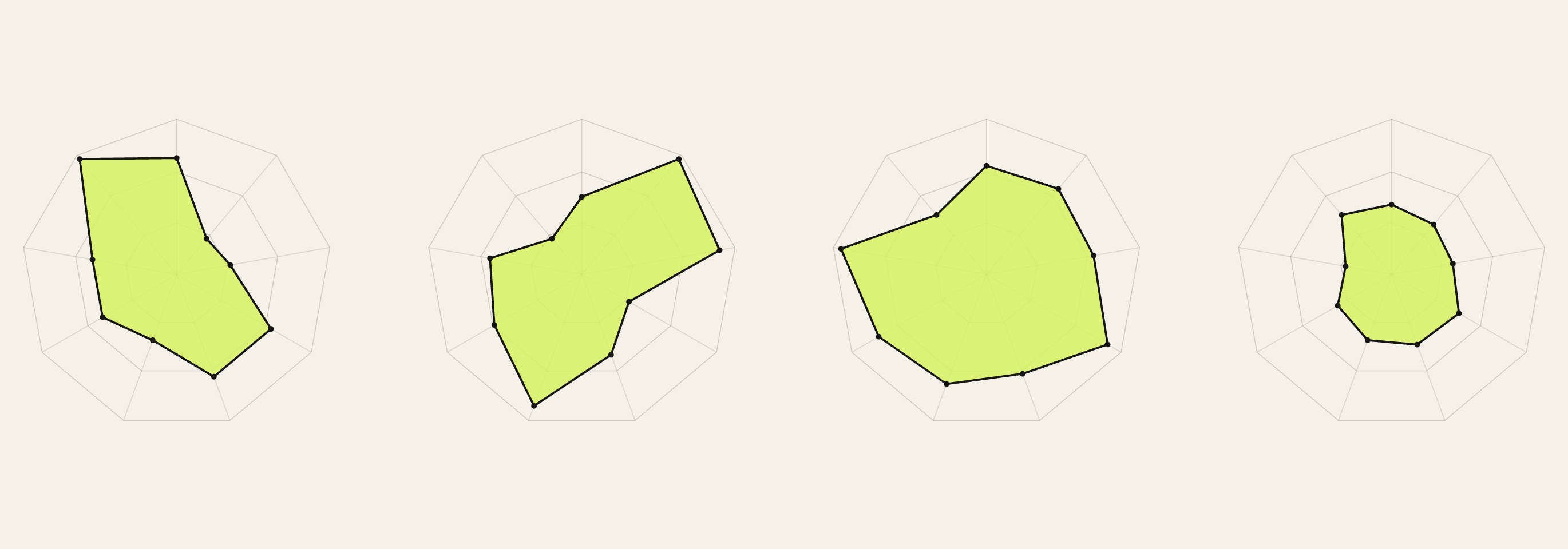
Reading seventeen numbers off a results page is work, which is why we built a shortcut: add your result on AthleteField and it becomes an eight-station radar, the shape of your race in one glance, ready to lay over a training partner's when you start planning the next one. Toronto was the start line, not the finish.
AthleteField
Join the Toronto field
Partners at your pace, who's racing, local sims.
Quick answers
- What do the splits in a Hyrox result mean?
- Your result breaks into eight run splits, eight station splits, and roxzone time. Together they show where your race was won or lost far better than the finish time alone.
- What is roxzone time in Hyrox?
- Everything between finishing a run and starting a station, and vice versa: the transitions. It counts toward your total, and for many first-timers it quietly adds up to several minutes.
- Can I compare my Hyrox time across divisions?
- Only loosely. Pro divisions use heavier loads than open, and doubles pairs split the station work, so the honest comparison is within your own division and gender.
- Which Hyrox splits matter most for improvement?
- Compare your first runs to your last runs, and look at wall balls and the sleds. Run fade and broken wall ball sets are where most open athletes lose the most recoverable time.
More field notes

Toronto
Hyrox gyms in Toronto: the full map
Training
The eight Hyrox archetypes

Training
The nine places Hyrox doubles pairs win or lose time
Toronto
Track your crew on race day: how it works

Toronto
Hyrox Toronto 2026 race week: everything you need to know

Toronto
When do I race at Hyrox Toronto? Start times by division