Field notes · Training · 8 min read
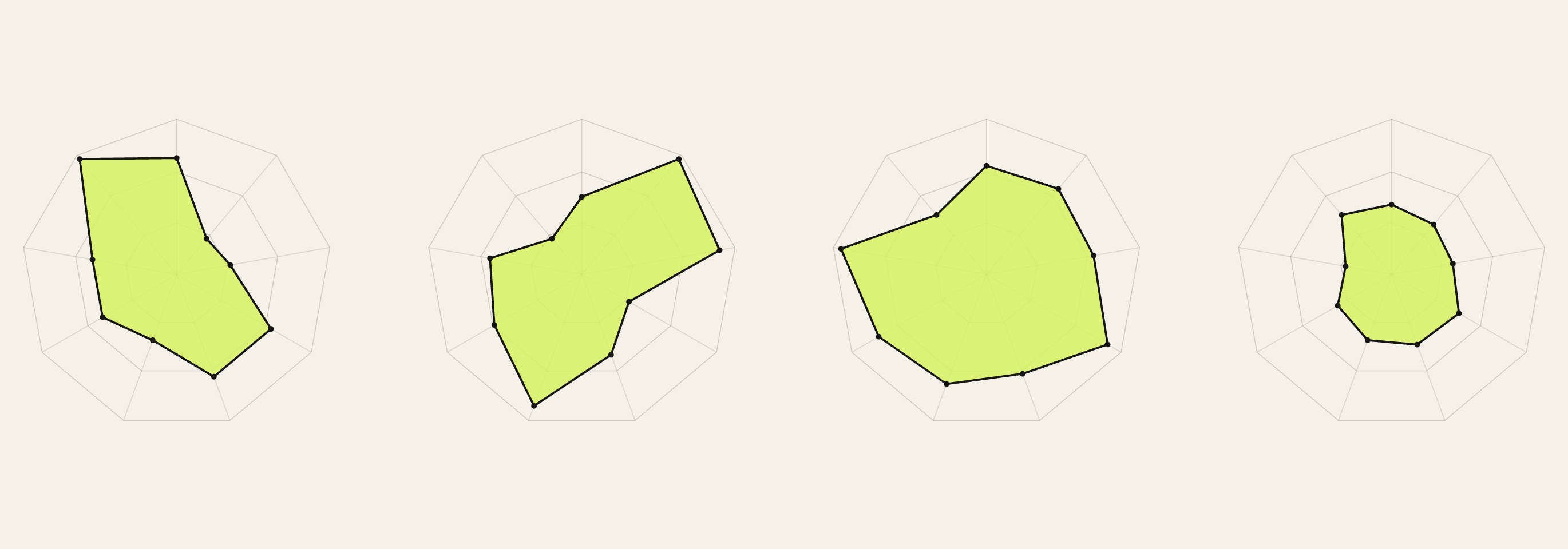
The eight Hyrox archetypes
Eight Hyrox archetypes from the gym floor, the runner who met the sled to the lifter staring down 8 km, and who each one pairs best with for doubles.
Edited by Laura Rossi
Hyrox athlete, Toronto · Aug 23, 2026
Every Hyrox field is full of people who arrived from somewhere else: running, CrossFit, the weight room, a team sport, or one Instagram reel too many. Where you came from shapes how you race, and it shows up in your radar, eight stations plus the running between them.
So here they are. Eight athletes you already know, probably from your own gym, possibly from your own mirror. Each with the radar they tend to draw, who they pair best with for doubles, and one tip. Descriptive fun, not a coaching plan, but the pairing logic is real, and it hangs on three mechanics of the format: you must run together, the team can only run as fast as both of you can go, and you can split the stations however you like. That's why run-pace compatibility beats everything, and why strength gaps are the easy part.
The Runner
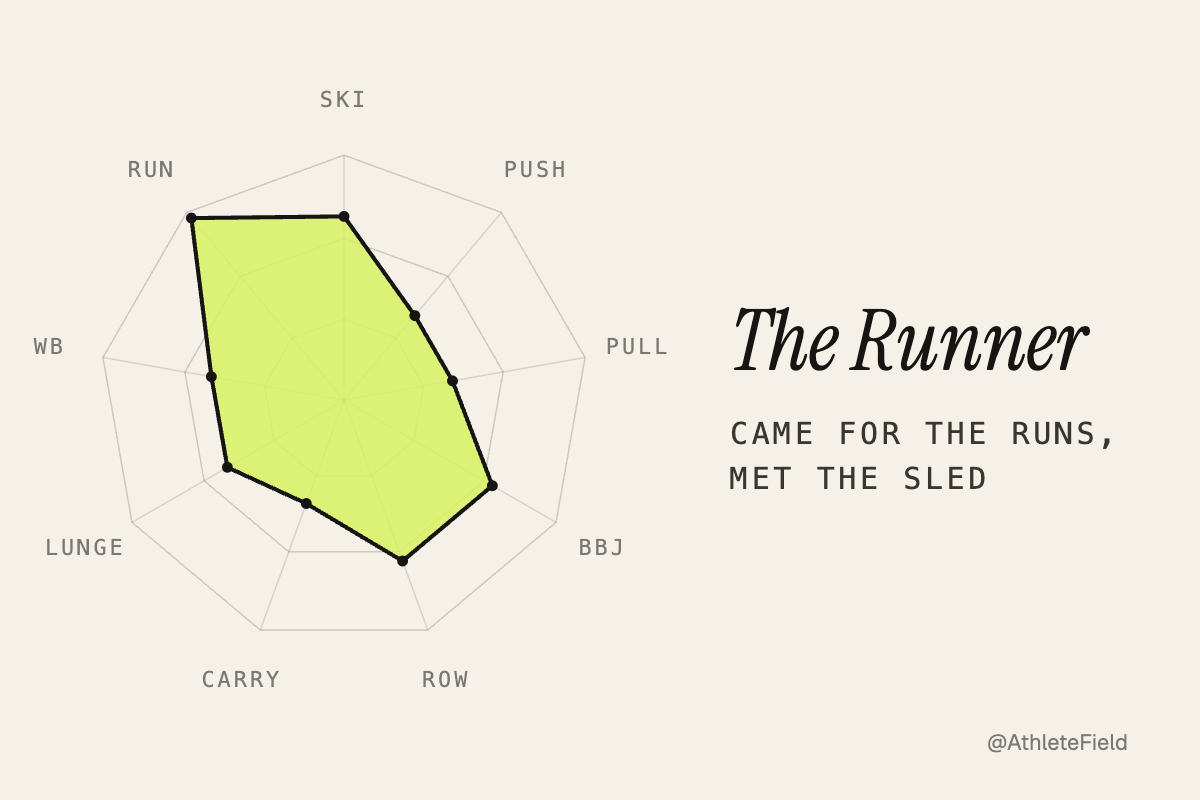
The radar.
Runs near the rim, ergs healthy, sleds soft. The shape of someone who did a half marathon block and figured the rest would sort itself out.
Race day.
You pass thirty people on every run and meet them all again at the sled push. About half the race is running, which is why you keep finishing ahead of people who out-lifted you all day.
Best with: The Lifter.
The classic trade, with the condition the format sets: the team only runs as fast as BOTH of you can go, so it works when their pace is within reach of yours, not a world apart. Inside that window your speed shows up as freshness: you take the bigger station share, they start every run with more in their legs, and the team's pace holds instead of fading. Their sled erases your worst station in return. If the gap is minutes, you're faster with another runner and an even split.
One tip.
In doubles, your job is volume, not pace: take the long half of every station so your partner runs alive. Solo, put heavy leg work in the block, because a sled you can barely move costs more than minutes, it costs the run after it.
Athletes who fit.
- Meg Jacoby 🇺🇸 ran NCAA cross country, then won two world titles.
- Holly Archer 🇬🇧 took European indoor 1500 m silver.
- Jake Dearden 🇬🇧 brought a 2:28 marathon.
On AthleteField.
- Jesse B. 🇨🇦 leads our Toronto board so far at 1:00:50, also strongest on the runs.
- Quinlan H. 🇨🇦 is the fastest woman on our Toronto board so far, 1:05:51 in Pro.
- Valerian G. 🇨🇦 opens the race with a 3:30 first kilometre.
The Ex-CrossFitter
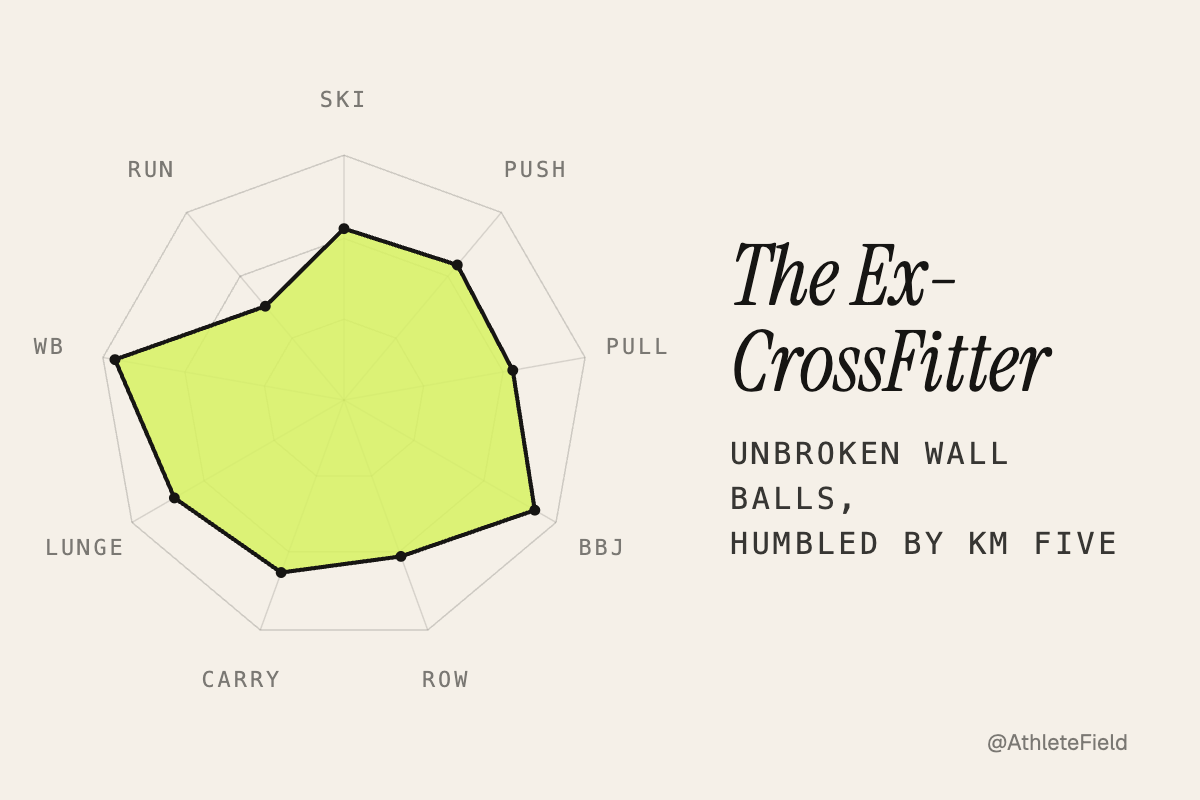
The radar.
Strong nearly everywhere, wall balls and burpees near the rim. The running axis is the honest one.
Race day.
Textbook movement standards, unbroken wall balls, and an opening pace you'll pay for by kilometre five. What you can power through in a 12-minute workout becomes a real limiter across 80.
Best with: The Endurance Machine.
They're the guardrail for your first-kilometre optimism: they set a pace the whole race survives, and hold the ergs while you eat the technical stations. Neither of you fakes anything.
One tip.
The race is usually lost in the first ten minutes, not the last. Pace kilometre one like there are seven more, because there are.
Athletes who fit.
- Lauren Weeks 🇺🇸 went from CrossFit regionals to three world titles.
- Beau Wills 🇳🇿 coached CrossFit full time for most of a decade.
The Lifter
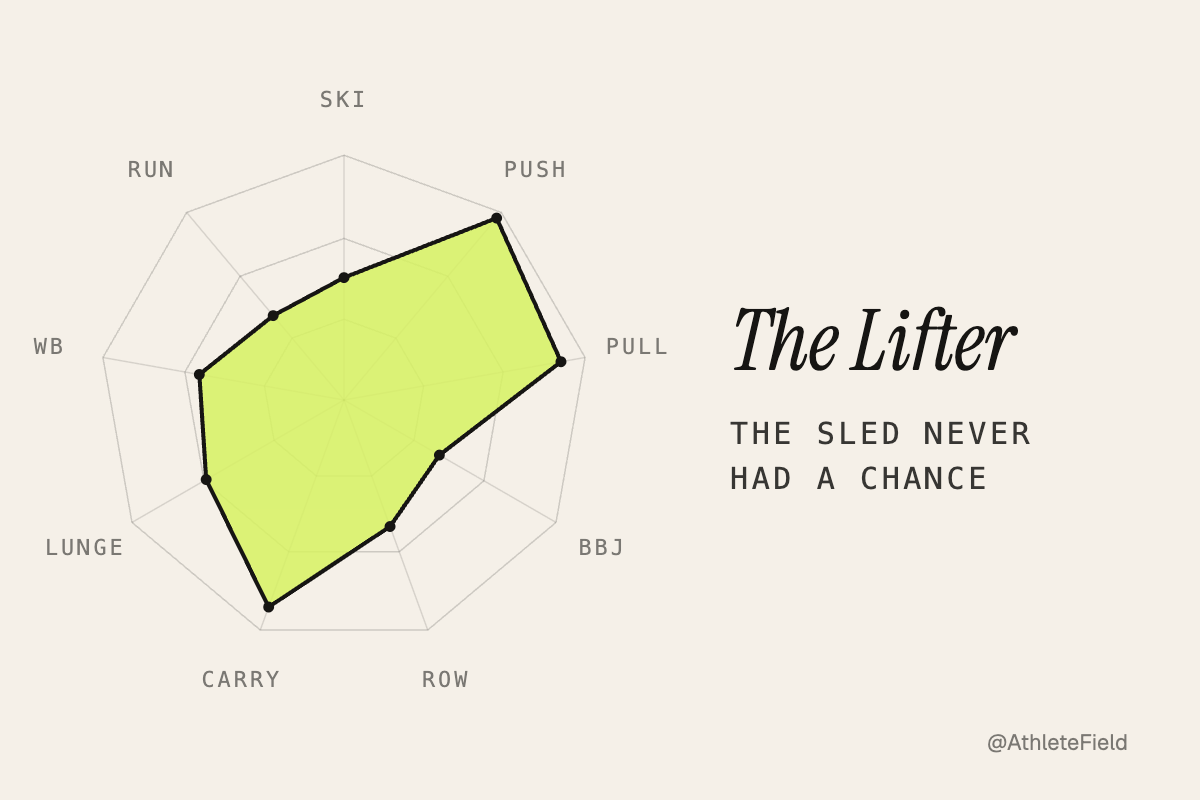
The radar.
Sled push, sled pull and carry near the rim. Running is the axis you don't show people.
Race day.
The sled has never felt lighter. Kilometre six has never felt longer.
Best with: The Runner.
You erase their worst stations, and here's the part people get backwards: the team runs at YOUR pace, not theirs. Their job is stripping station volume off your legs so your pace survives eight kilometres; your job is not blowing up at kilometre six. Complementary strength works only because the stations are splittable. The runs aren't.
One tip.
Train running under fatigue, short runs straight off stations, not distance-runner volume. The race never asks you to run fresh, so don't only practise fresh.
Athletes who fit.
- Graham Halliday 🇬🇧 trained bodybuilding-style from 14.
- Gabrielle Nikora-Baker went from bodybuilding to the Elite 15.
On AthleteField.
- Chris F. 🇨🇦 races Open and Pro out of Ottawa: 1:03:47 with a 1:33 farmers carry.
- Dimitry G. 🇨🇦 went 1:06:56 in Open on a 2:28 sled push and a 1:24 farmers carry.
- Jesse F. 🇨🇦 races doubles and moves the sled: 1:39 push and a 1:26 farmers carry at Acapulco.
The First-Timer
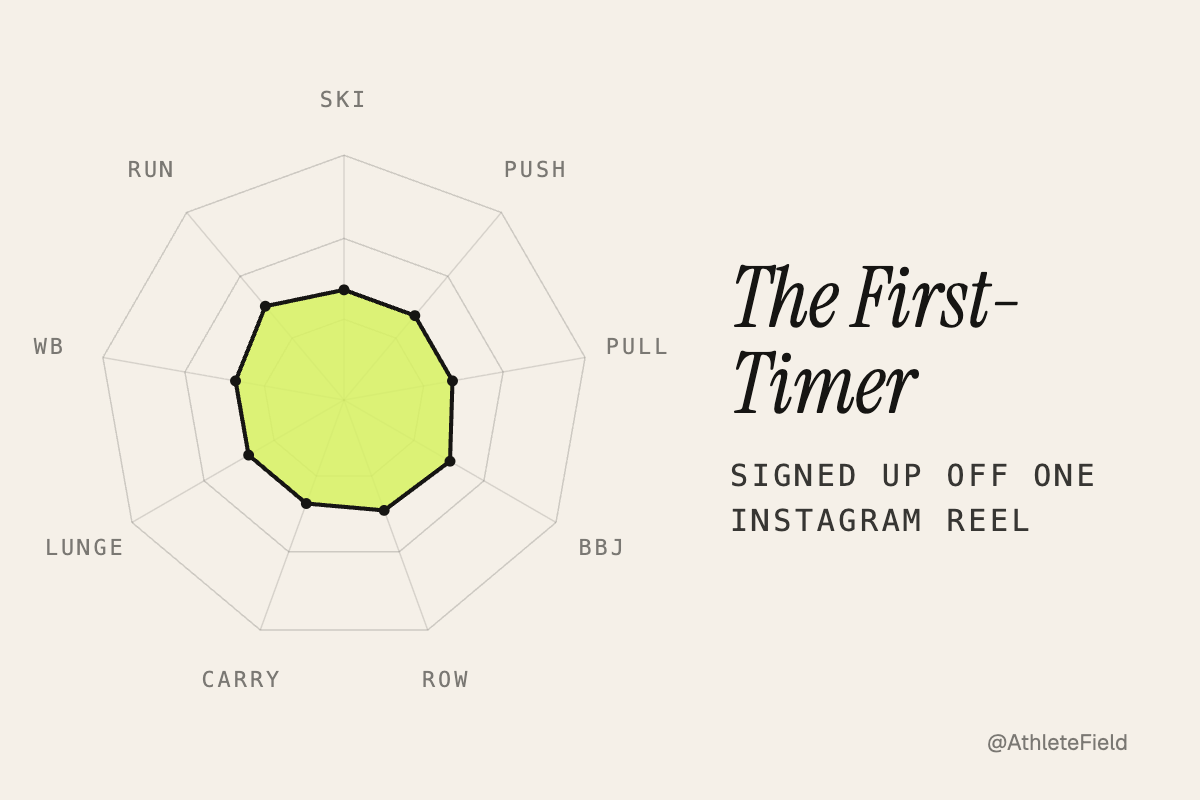
The radar.
Modest and even, with a dip at wall balls nobody warned you about.
Race day.
You trained everything except the wall balls at race weight and the walking between stations. The roxzone quietly takes minutes; the last station takes the rest.
Best with: The Workhorse.
Honestly, the best first doubles is someone who's done it before and happily takes the bigger half.
One tip.
Wall balls at race weight with your heart rate already high, and a roxzone plan you've said out loud. Those two things are free time.
The Team-Sport Athlete
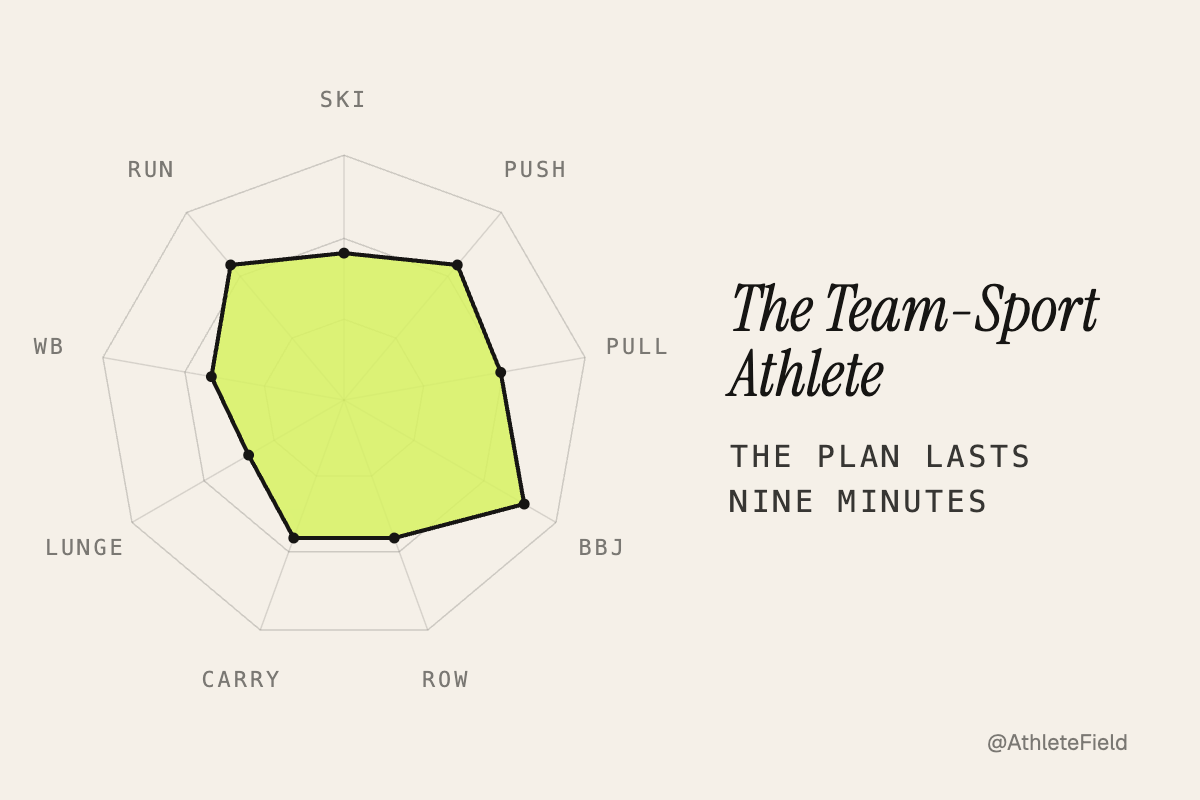
The radar.
Burpees and bursts strong, a repeat-sprint engine, and a back half that thins out where the pacing discipline should be.
Race day.
First out of the corral, competitive with people you've never met. The plan lasts nine minutes.
Best with: The All-Rounder.
Their structure absorbs your chaos, and you'd both rather die than lose to the pair ahead.
One tip.
Your engine is real; aim it. Ride the first two runs below what feels right and you'll finish through the same people who out-sprinted you at the start.
Athletes who fit.
- James Kelly 🇦🇺 played Aussie rules, then took third at the 2024 Worlds.
The Endurance Machine
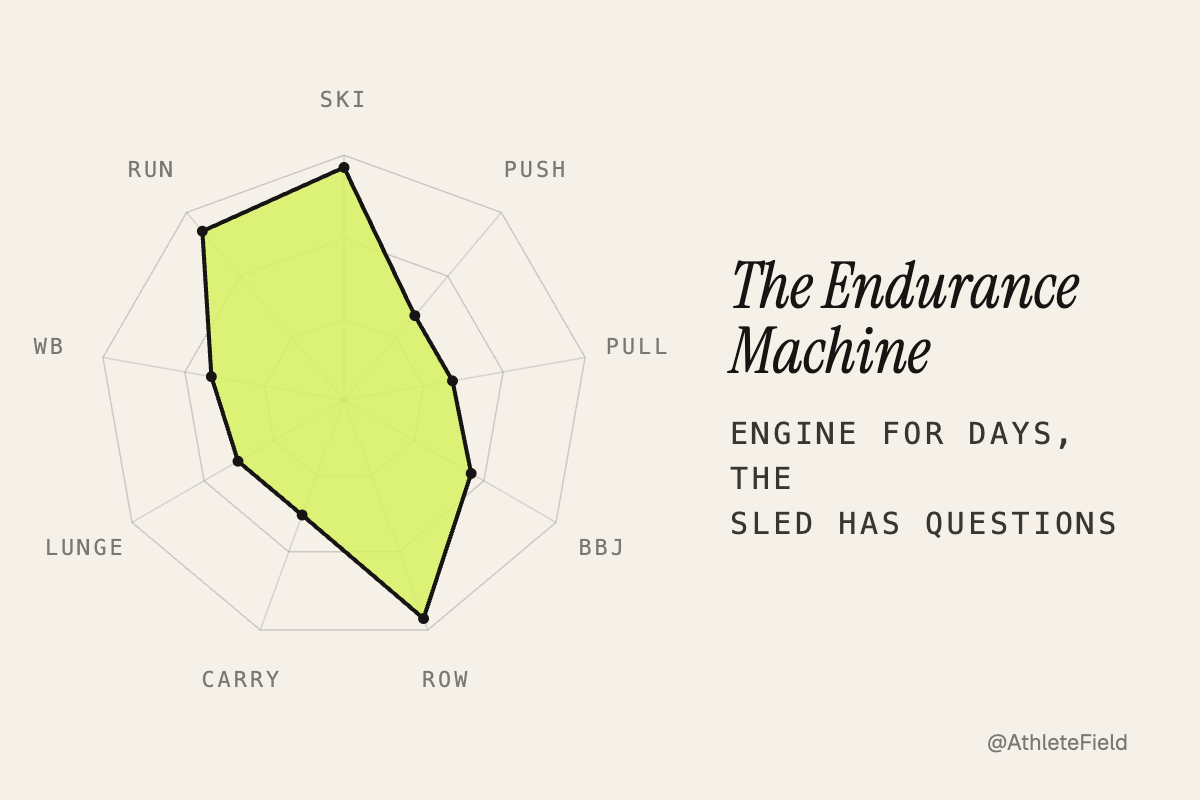
The radar.
SkiErg, row and running near the rim, the strength stations negotiable. Triathletes and rowers draw this one.
Race day.
You sit on the erg and time slows down. Then someone hands you a sled. If you rowed before, the SkiErg still feels like rowing turned inside out.
Best with: The Ex-CrossFitter.
You bring the pacing IQ and the engine; they bring everything with a barbell shape.
One tip.
In doubles, take the ergs in long blocks and swap the row once at most. Solo, the sled work you keep skipping is the whole gap.
Athletes who fit.
- Alexander Roncevic 🇦🇹 swam at national level, then won a world title.
- Jess Towl 🇬🇧 came through the British triathlon programme.
- Celia Duff 🇬🇧 rowed at Cambridge, twice an age-group champion.
On AthleteField.
- Jules L. 🇨🇦 races Pro at 1:04:54 with all eight run legs inside a 32-second spread.
- Katy R. 🇨🇦 is the fastest woman in Pro on our board at 1:01:34, runs 2 to 8 inside 24 seconds of each other.
The Workhorse
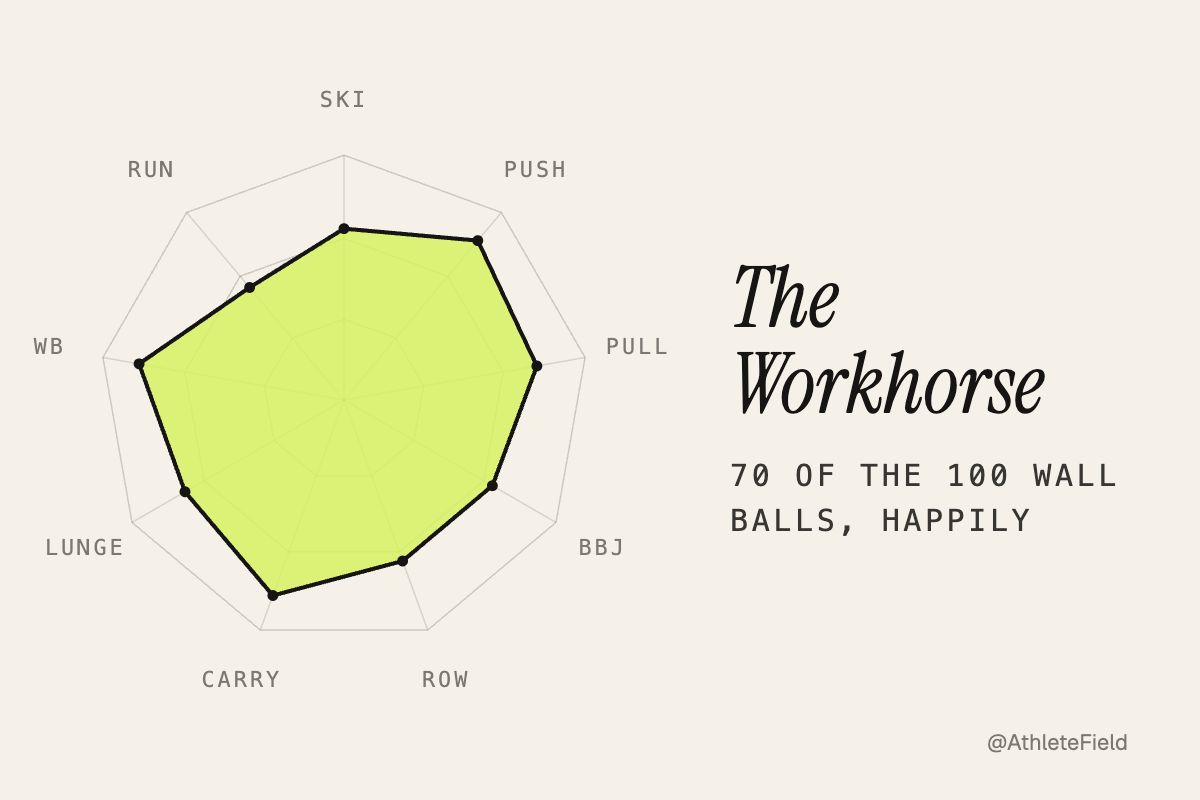
The radar.
Strong across the stations, built for the uneven split.
Race day.
Your partner's watch says doubles. Your legs say singles. You took 70 of the wall balls and said it was fine, and it was.
Best with: anyone.
That's the point. But a partner whose run pace matches yours turns the carry into a strategy instead of a rescue.
One tip.
The uneven split is correct, coaches prescribe it, so own it out loud before the gun: who takes two thirds of the sleds, who closes the wall balls, when you swap.
Athletes who fit.
- Sophia Kaiser 🇩🇪 held the women's doubles world record.
- Tim Wenisch 🇩🇪 and Alexander Roncevic 🇦🇹 set the pro doubles record, 47:40.
- Pelayo Menendez 🇪🇸 split reps 5 and 6 at a time to a doubles world record.
On AthleteField.
- Sarah F. 🇨🇦 races Pro at 1:10:19 and the stations carry it: a 2:51 sled push and a 1:45 farmers carry.
The All-Rounder
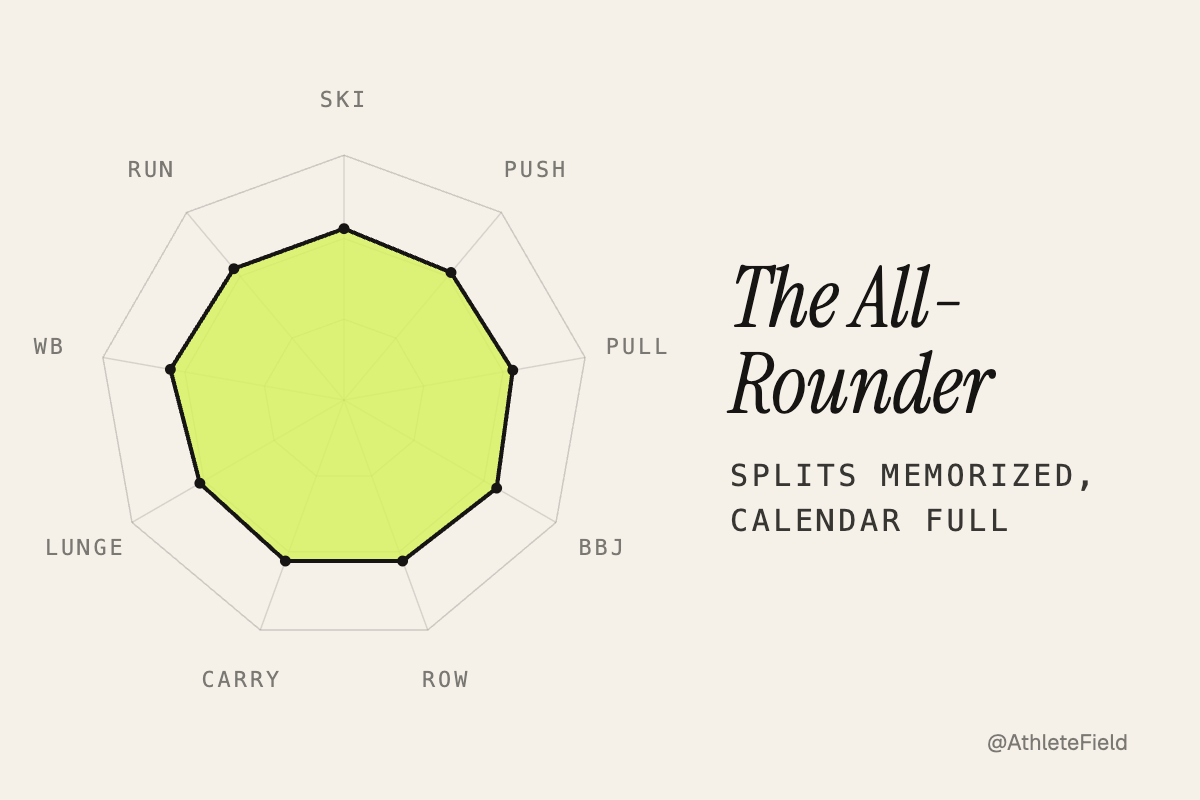
The radar.
Even and solid everywhere, the shape of someone who trains all of it, and has the race calendar to prove it.
Race day.
"Athlete" went in the bio the morning after your first race. You know your splits to the second and the next three race cities by heart.
Best with: The Team-Sport Athlete.
You bring the race plan and the spreadsheet; they bring the chaos the plan needed.
Athletes who fit.
- Hunter McIntyre 🇺🇸 has won the world championship more than once.
- Cole Learn 🇨🇦 swept Chiba: fastest on 7 of 8 runs and every sled.
- Ryan Douglas 🇨🇦 went 56:17 for second in Vancouver's Pro.
- Meg Jacoby 🇺🇸 has no station to hide.
- Lauren Weeks 🇺🇸 got to three titles by owning all nine.
On AthleteField.
- Chelsie G. 🇨🇦 races all three formats across four cities, solid everywhere.
- Erick T. 🇨🇦 runs 1:03:10 with no station out of line: even kilometres, quick sleds.
One tip.
Point the obsession at one block: pick the next race, structure the eight weeks before it, and let the calendar do the motivating. It's what you were going to do anyway.
Which one are you?
A note for the home crowd: Canada already has skin in this game. Cole Learn 🇨🇦 and Ryan Douglas 🇨🇦 both race in the Elite 15, and Terra Jackson 🇨🇦 owns two DEKA MILE world titles. The archetypes go all the way up.
Your radar already draws the answer. Add your race result on AthleteField and look at the shape, eight stations plus your running against the field, and if you're pairing up for doubles, you can see any two radars side by side before you commit to someone else's crater.
AthleteField
Join the Toronto field
Partners at your pace, who's racing, local sims.
Quick answers
- What are the Hyrox archetypes?
- Recognizable athlete types drawn from where people come to Hyrox from, like the runner who dominates the runs and meets their match at the sled, or the ex-CrossFitter with perfect wall balls and a pacing problem. Each maps to a radar shape, not a diagnosis.
- Do runners or strong athletes do better at Hyrox?
- About half of an average race is running, which favours runners, but light runners can lose minutes on the sleds. Strong athletes who pace well and train running under fatigue close the gap. The honest answer is the race rewards whoever fixes their weak half first.
- Which Hyrox athletes make the best doubles pairs?
- Pairs whose run paces are compatible and whose station strengths cover each other, because you must run together but can split the stations any way you like.
- How do I find out my Hyrox archetype?
- Look at your radar. On AthleteField it draws itself from your race result, eight stations plus your running, against the field.
More field notes

Toronto
Hyrox gyms in Toronto: the full map
Training
The nine places Hyrox doubles pairs win or lose time
Toronto
After Hyrox Toronto: how to read your result
Races
The night before a Hyrox: kit list and a quiet head
Toronto
Track your crew on race day: how it works

Toronto
Hyrox Toronto 2026 race week: everything you need to know