Field notes · Training · 3 min read

Hyrox sled training when your gym has no sled track
How to prepare for the Hyrox sled push and pull without a sled: the substitutes that transfer, the ones that don't, and how to handle the surface problem.
Edited by Laura Rossi
Hyrox athlete, Toronto · Aug 10, 2026
Two of Hyrox's eight stations are sleds, and most commercial gyms own neither a sled nor ten metres of turf to push one on. That's not a reason to show up unprepared. The sled rewards two things, leg strength through a full range and the willingness to keep straining when nothing seems to move, and both can be built without a track. Here's what transfers.
Why is the Hyrox sled so hard to replicate?
Friction. A sled isn't a barbell: the difficulty isn't just the listed weight, it's the surface under the runners. Race sleds run on carpet, which grips far more than the rubber floor or turf strip in a gym, so the same load feels dramatically heavier at the venue than it did in training. This is the single most common race-day surprise for first-timers, and it's why "I pushed race weight easily at my gym" is a sentence usually spoken before the race, not after.
The practical consequence: if you do get occasional sled access on a slick surface, go heavier than race weight, and treat the effort and the low driving position as the target rather than the number on the plates.
What actually substitutes for the Hyrox sled push?
The push is a leg-drive problem: hips low, arms locked or bent onto the poles, torso at roughly 45 degrees, taking short powerful steps. Build it with:
- Treadmill pushes. On a non-motorized treadmill, or a standard one switched off if your gym allows it, drive the belt with the same low position and short steps. This is the closest substitute there is: honest resistance, sled-like posture, ten metres from the dumbbells.
- Heavy walking lunges and split squats. The push is delivered one leg at a time. Heavy unilateral work is the strength base, and it pays rent at the sandbag lunges too.
- Plate pushes. A bumper plate shoved along turf, carpet or a towel on a smooth floor gives you the horizontal drive pattern. Light resistance, good positions, decent conditioning when done for repeats.
- Wall drives. Marching hard against an immovable wall in sled position for 15 to 20 seconds trains the strain itself: producing force against something that barely responds.
What substitutes for the sled pull?
The pull is grip, lats and hips: hand-over-hand rope work while bracing low. Build it with:
- Hand-over-hand rope pulls. Tie a rope to a plate, a loaded dumbbell or anything heavy that slides, and pull it toward you across the floor. This is the pattern, full stop. Most gyms have a battle rope that will happily moonlight.
- Heavy rows and hinges. Bent-over rows, seal rows and Romanian deadlifts build the back that the rope work spends.
- Grip under fatigue. Towel hangs, thick-grip holds, or simply doing your rope pulls late in a session. At the race, grip fails before lats do.
How should you program it without a sled?
Twice a week is plenty: one heavy strength day (lunges, split squats, rows, hinges, building load over weeks) and one station-flavoured day (treadmill or plate pushes and rope pulls in intervals, ideally straight off a run, because that's how the race serves them). Keep pieces short and repeated, roughly the length of a station effort, rather than long grinds.
Then, if at all possible, touch a real sled before race day. Even two or three sessions teach you what no substitute quite does: the rhythm of restarting a dead sled, and the patience of moving something that gives you nothing back. In Toronto, a handful of gyms have proper sled tracks and program them weekly; we keep a current list on AthleteField and in our guide to Toronto's Hyrox gyms, and training at one for even a few weeks before the race closes the gap between gym-strong and sled-ready.
AthleteField
Join the Toronto field
Partners at your pace, who's racing, local sims.
Quick answers
- Can I train for the Hyrox sled without a sled?
- Yes. Heavy unilateral leg work, treadmill pushes, plate pushes and hand-over-hand rope pulls cover the strength and positions. You'll want at least a couple of sessions on a real sled before race day if you can get them.
- What's the best sled push substitute?
- Pushing on a non-motorized or switched-off treadmill is the closest match for position and drive, backed up by heavy walking lunges and split squats for the leg strength.
- What's the best sled pull substitute?
- Hand-over-hand rope pulls, dragging a plate or sled toward you along the floor, plus heavy rows and hinge work for the back and grip.
- Why does the race sled feel so much heavier than the gym?
- Surface. Race sleds run on carpet, which produces far more friction than a rubber gym floor or turf strip, so the same listed weight feels much heavier at the venue.
More field notes

Toronto
Hyrox gyms in Toronto: the full map
Training
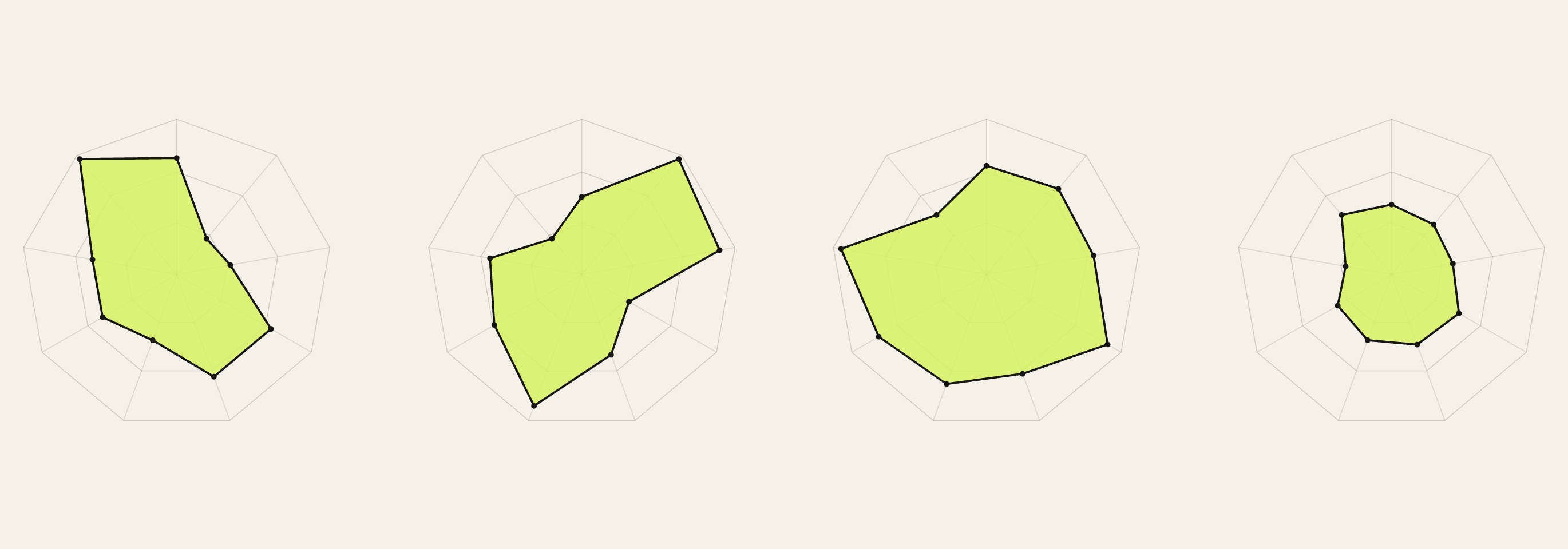
The eight Hyrox archetypes
Training
The nine places Hyrox doubles pairs win or lose time
Races
The night before a Hyrox: kit list and a quiet head
Toronto
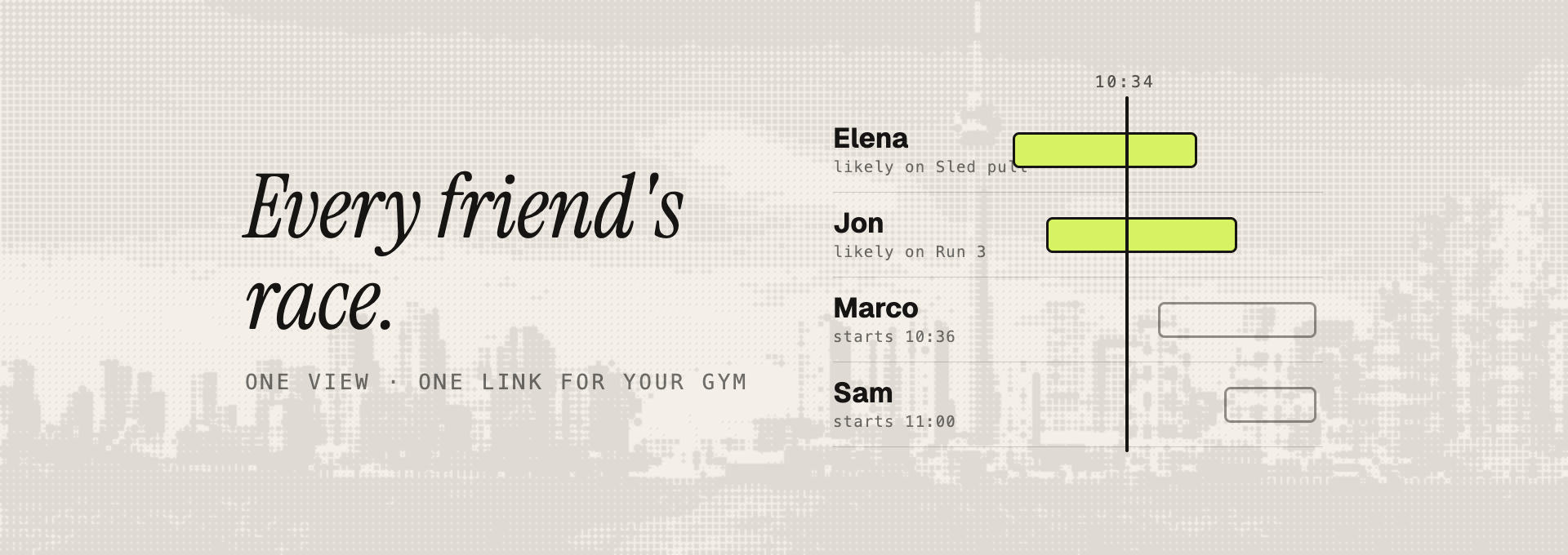
Track your crew on race day: how it works

Toronto
Hyrox Toronto 2026 race week: everything you need to know